"It's affordable, the food is good, and the beach is nice.

words and images by Marky Ramone Go
As a war history junkie from an early age, I first stumbled upon the name Da Nang while reading over accounts of the Vietnam War. Not long after, a television series that aired in the Philippines in the early 1990s, entitled “China Beach,” taken from the moniker American soldiers gave to My Khe Beach, a slender stretch of Da Nang’s long and sunny shoreline, etched the city even deeper in my imagination. Those early mentions of the city shaped my understanding of Da Nang: once a pivotal site in a violent conflict, now transformed to a coastal city humming with life and drawing travelers from around the world.
Da Nang’s story stretches far beyond the modern skyline that now defines it. Once part of the ancient Champa Kingdom, the city shared its roots with My Son Sanctuary, today a UNESCO World Heritage Site and an hour away from the city, where the remnants of Hindu temples, built between the 4th and 13th centuries, stand as remnants of a vanished civilization. Together with old cities like Hue and Vung Tau, these sites formed the heart of Champa’s once-prosperous realm along Vietnam’s central coast.
Centuries later, Da Nang would find itself at the center of a conflict. During the Vietnam War, it became a strategic hub, home to an air base operated by both the South Vietnamese Army and U.S. forces. After the Fall of Saigon in 1975 and the hurried American departure, the city began its long metamorphosis from war-scarred outpost to one of Vietnam’s most dynamic urban centers.
Today, Da Nang’s long stretch of pale sand along the East Vietnam Sea beams with new life: high towers rise where army bunkers once stood, beachside boulevards pulse with energy, and the city’s beachfront appearance has invited comparisons to Miami, though Da Nang, with its unique culture, and a landscape that also includes a mountainous area, is incomparable to any city in the world.
My friend Katie and I booked an Airbnb less than 200 meters from the beach, roughly midway along Da Nang’s 30-kilometer coastline. Each morning, we walked the boulevard, a wide pedestrian stretch lined with coffee stalls, food carts, and tidy rows of trees, that felt like a glimpse into what Manila’s Roxas Boulevard could have been, only if our city planners had urban foresight meeting sound city vision. One morning while on our way to somewhere, our Grab driver proudly gestured toward a narrow bridge now used mostly by cyclists. “That small one,” he said, “was the only bridge in Da Nang back in 1991.” It was a simple detail, yet it spoke volumes about how far Da Nang had come; from a sleepy coastal town to a bustling coastal city attracting hordes of tourists from around the world.
Speaking of bridges, on weekends the city’s Dragon Bridge, a six-lane, 666-meter-long structure built with an arch-beam-wire steel design and crowned by a dragon’s head, puts on a dazzling show, spraying water and shooting bursts of light to mimic the creature breathing fire. Crowds gather along the riverside promenade to witness the spectacle. During our weekday visit, the scene was calmer; we took a leisurely stroll across the bridge’s pedestrian lane, pausing to admire the magnificent sunset over the Han River.
Nearby, we crossed the Love Bridge, a short pedestrian walkway along the Han River where couples attach padlocks to the railings as symbols of lasting affection. At dusk, the scene turns notches cinematic as the heart-shaped lanterns cast a magical glow against the fading red sky, and the Dragon Bridge in the background flashes with changing colors reflected on the water below.
Whether it’s a stroll along the beach, a walk by the Han River, or a wander through Da Nang’s lively streets lined with cafés, art galleries, flea markets and restaurants serving delicious local food, racking up more than 20,000 steps a day feels less like exercise and more like pleasure. There’s so much to see and do on a whim, far beyond the usual beach bumming.
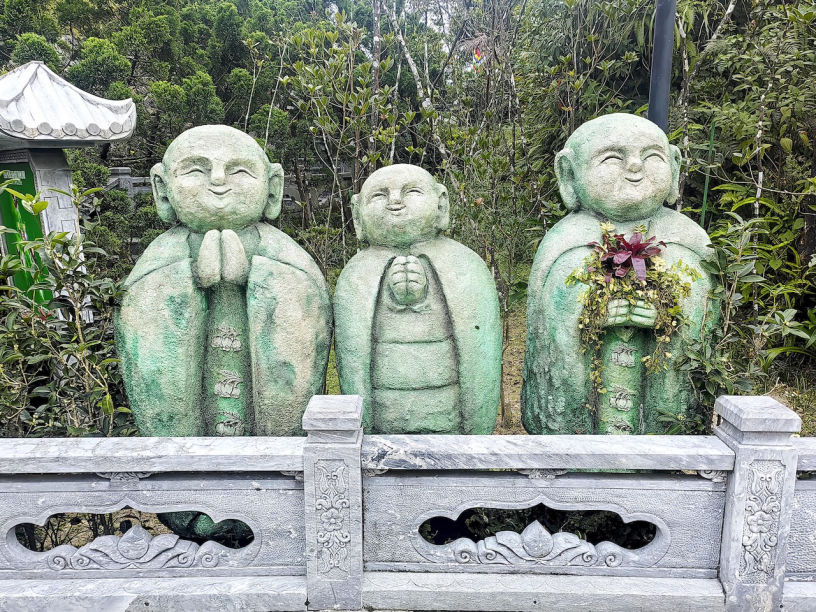
The next day, we woke early to visit the Marble Mountains, located just half an hour from our Airbnb. Rising dramatically from Da Nang’s flat coastline, the Marble Mountains are a cluster of limestone and marble outcrops steeped in myth and Buddhist devotion.
Pagodas crown the peaks, while caves reveal altars illuminated by shafts of sunlight and veiled in incense smoke. The site serves as both a place of pilgrimage and a panoramic lookout over Da Nang’s rapidly developing urban landscape.
From Da Nang’s beaches, we headed next to the mountains.


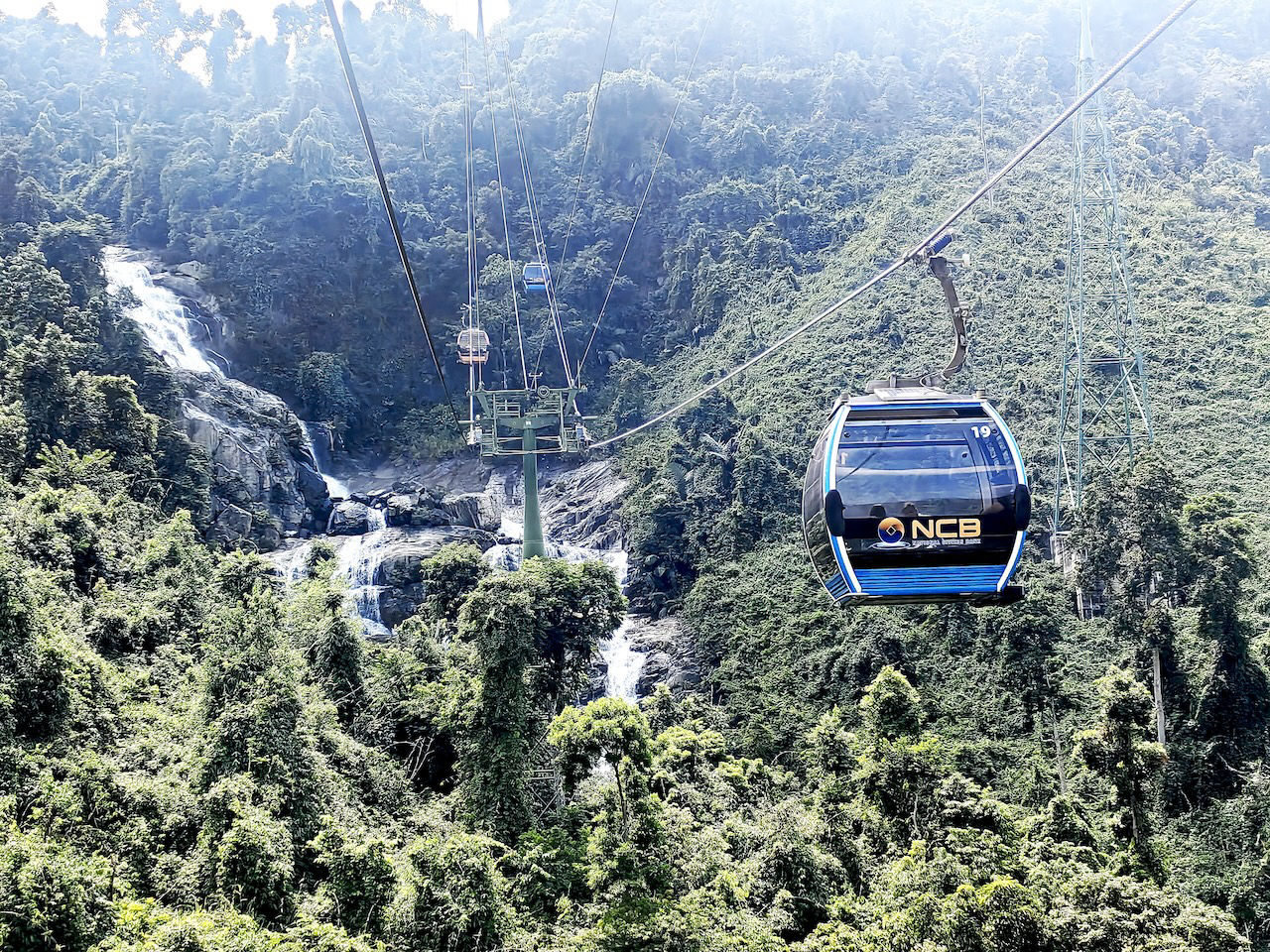
Whenever I visit a mountaintop destination, I make it a point to stay fully awake while passing through the scenic zigzag roads. The journey to Bà Nà Hills offered a bit of that, but the main route unfolded not on land, but in the air — via an extraordinarily long cable car ride.
To call it picturesque would be an understatement.
We boarded the main cable car from the reception area to Sun World Bà Nà Hills; a theme park perched atop the mountains. Stretching 5,801 meters, the line passes over waterfalls and a dramatic sweep of limestone ridges and sheer drops. It holds the world record for the longest non-stop single-track cable car.
The half-hour ascent unfolded like a slow-motion journey through weather itself: one moment, the sky was clear, the next, the air covered in fog. My friend and I shared a cable car with a family of three from India visiting Bà Nà Hills for their holiday.
After the usual exchange of where we were from, I couldn’t resist pitching the Philippines as their next destination.
“I’ve heard the beaches in Palawan are great,” the father said. “They are,” I replied, “and there’s even more to see if you have the time to explore.”
When I mentioned my past trips to India, his face brightened. “We’re from Rajasthan, in Udaipur,” he said, his wife smiling beside him. “We’re glad you enjoyed your experience there.”
Traveling in places like Vietnam, which only trails Malaysia and Thailand in international arrivals in Southeast Asia, often means meeting strangers from across the world in brief but insightful ways. Even short exchanges offer small lessons in understanding. We didn’t know it then, but as our cable car glided toward the mountaintop, we were about to join the crowd of countless visitors converging from every corner of the globe.
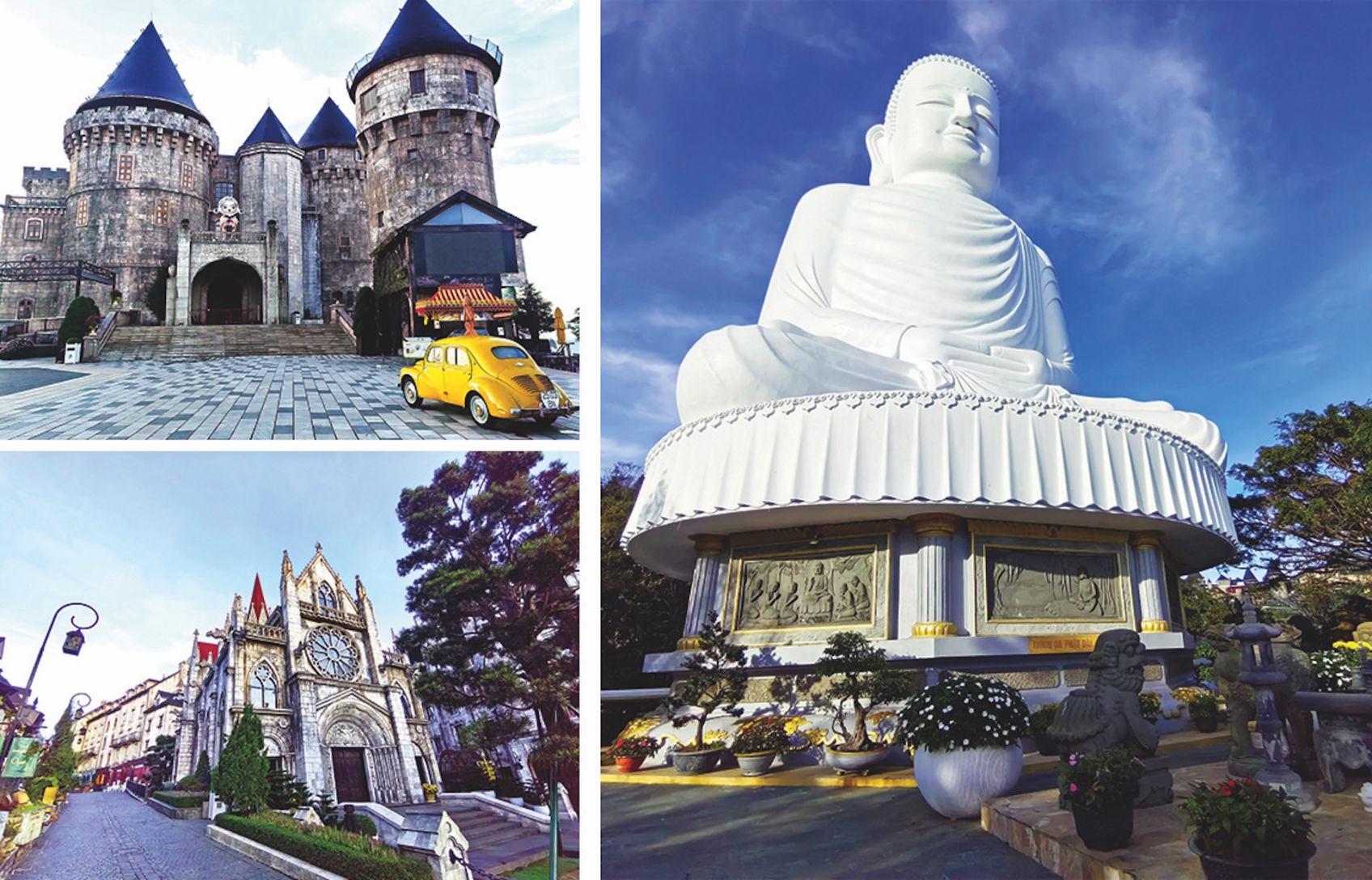
Sun World Bà Nà Hills stands on the site of an old French hill station, first established by French colonists in 1919. From this height, the view stretches across a rolling expanse of mountains and, beyond them, the distant glimpse of the sea.
The park is divided into several zones, but the heart of it, the one that draws the crowds, is the French Village, a carefully constructed homage to Vietnam’s former colonizers. Here, a Gothic Cathedral rise above cobblestone lanes, framed by country-style villas, manicured gardens, and fountains that lend the place a certain olden European vibe. It is a make-believe village, but one rendered with such precision that, for a moment, you might forget where you are.
Shops, cafés, and restaurants line its streets, and even the hotels sustain the illusion. We stayed at one of them, a Mercure property that exuded the same air of European charm my friend, who has been to France and elsewhere in Europe, could attest to — making the entire place feel part-theme park, part-nostalgia. On our first day, we simply walked and walked stopping for a few beers at one pub, coffee at another, and beef skewers from a charming outdoor stall. We even rode the alpine coaster, a self-driven two-seater that winds along a roller-coaster track through the hills.
A lovely dinner with wine and a fancy dessert capped our foggy first night in Bà Nà Hills, as we eagerly prepared to rise early the next day. The following morning, we woke before 5 a.m. and for good reason. We wanted to visit the famous Golden Hand Bridge before the crowds arrived, since it becomes packed with day-trippers as the morning wears on.
The Golden Bridge is a feat of architecture and imagination: a 150-meter pedestrian walkway seemingly held aloft by two colossal stone hands, as if the mountains themselves were lifting a piece of jewelry toward the sky. It’s both dreamy and spiritual, a design meant to evoke the “hands of God” cradling the bridge.
True enough, when we arrived a few minutes after 6 a.m., we had the bridge almost to ourselves, sharing it only with a couple of dozen other visitors. The weather was perfect, which made the experience even better. We walked back and forth across the short span, taking in the atmosphere and the surrounding gardens until we were happily exhausted and craving a good cup of coffee.
After spending a night in Bà Nà Hills, we ended our short but rewarding five-day stay in Da Nang with a promise to return. On the drive to Hoi An, the charming, lantern-lit old district about an hour and a half away, I found myself looking back on the city with a sense of wanderlust satisfaction.
Da Nang’s appeal lies in its balance. The city offers the easy pleasures of a coastal escape, such as its long stretches of beach, good coffee, and equally good food, but also a growing appeal that attracts remote workers and long-stay travelers. You can spend a morning swimming or surfing, then spend the afternoon in a café overlooking the Han River, watching the city move in what some says the “Vietnam pace,” one that is hectic yet cinematic.
There’s more beyond the beaches, of course. Da Nang holds traces of its rich history and culture through numerous sites, many of which we didn’t have time to visit on this trip, along with newer attractions like the family-friendly Bà Nà Hills.
Along the way, we met a few Filipino travelers who seemed having a wonderful time just like us. When we asked one why she chose to visit, she simply said, “It’s affordable, the food is good, and the beach is nice.”
It’s hard to argue with that. And I’ll add more positive points for Da Nang.
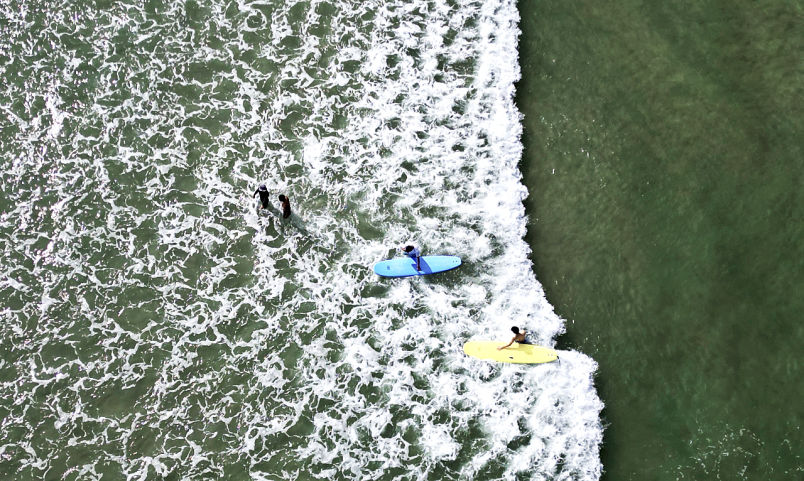
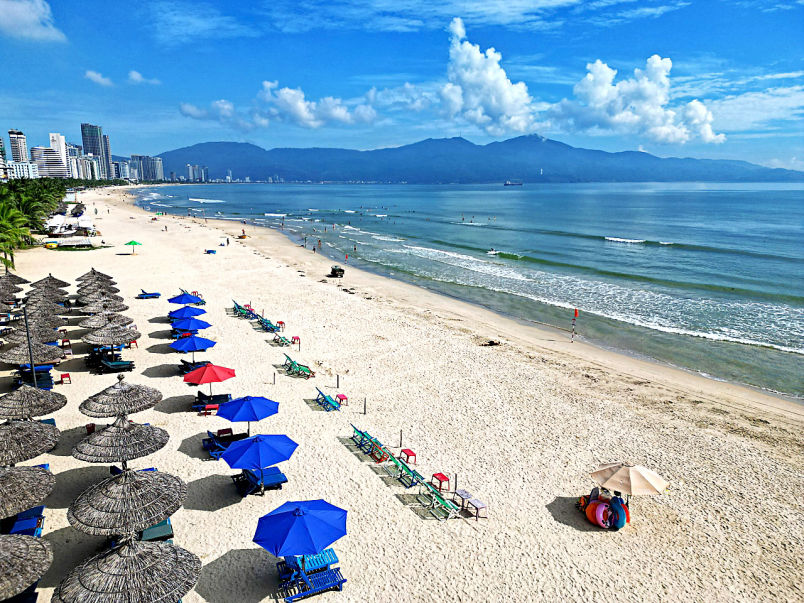
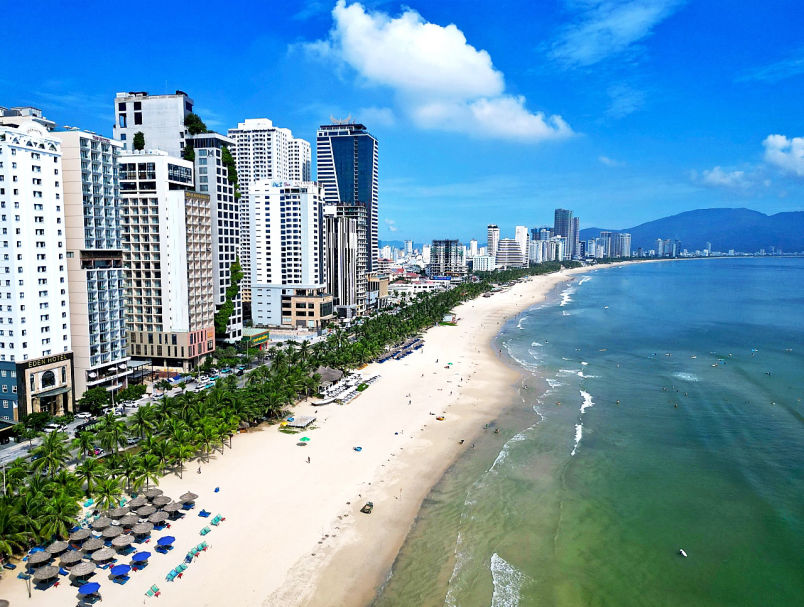
Da Nang's appeal goes beyond the charm of its captivating white sand beaches

AI Website Builder